
Welcome to the iPrepBuddy Monthly Newsletter!
Stay informed with the latest updates on our platform and the newest advancements in ophthalmology. This newsletter aims to keep you prepared for your upcoming exams.
by Dr Chloe Walugembe on 01/08/2026
Clinical Insight: Stevens-Johnson Syndrome
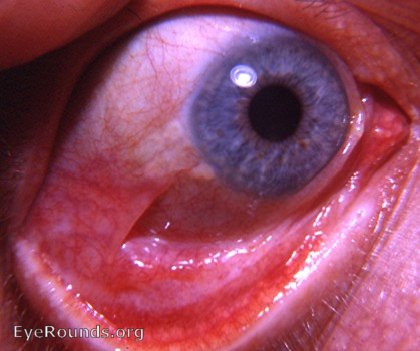
Figure 1 A symblepharon created secondary to SJS [1]
Stevens-Johnson syndrome (SJS) is a rare condition (1–7 cases per million/year) causing widespread skin blistering with mucosal involvement affecting the eyes in as many as 80%. Leading triggers include sulfonamide antibiotics, anticonvulsants (e.g. phenytoin) and Mycoplasma pneumoniae infection - especially in children. Overall 6 week mortality is around 23%. Among survivors, roughly 60% develop long-term ocular complications, ranging from dry eye to corneal scarring and limbal stem cell failure. Early amniotic membrane transplantation (within 5–10 days of rash onset) is the key intervention shown to reduce long-term visual sequelae in moderate-to-severe ocular involvement; chronic cases with severe surface damage may later require Boston keratoprosthesis or keratolimbal allografting [2].
Platform Updates
We have now started our virtual part 2 viva evenings - these are ad hoc hour long sessions in small groups for those who have subscribed to part 2 on the platform
We hope later this year to run a fully virtual course to complement the AI part of the platform.
Secondly, we are active collaborating with colleagues in building technology supported educational modules, if anyone has a workshop or idea they’d like to build around, reach out to us!
Updates in Ophthalmology
1. Using OCT scan in preterm infants to predict brain development
Retina scans in preterm babies could predict brain development. Duke researchers used bedside OCT to measure the retinal nerve fibre layer (RNFL) in very preterm infants — those with a thicker RNFL at ~36 weeks had better motor and cognitive outcomes at age 2. Very preterm infants face up to a 50% higher risk of developmental challenges affecting movement, learning, language, and behaviour. Since the retina is part of the CNS, the scan may offer an early, noninvasive window into brain development, flagging at-risk infants weeks after birth rather than years later. [3].
2. The impact of missed anti-VEGF therapy
Wet AMD patients who missed follow-up for 6–12 months (n=262) lost an average of ~5 letters of vision right after the gap — and it didn't recover. Losses were worse (–7.6 letters) if the disease was still active when they stopped attending, versus quieter disease (–3.7 letters). About 1 in 4 patients had a gap like this within 6.5 years, more likely if injections had already been spaced out. Takeaway: missed visits in wet AMD care cause real, lasting vision loss — reinforcing the case for better retention and monitoring strategies [4].
3. NHS ophthalmology waiting lists remain a major concern
NHS ophthalmology waiting lists remain a serious concern — a report presented to MPs on 15 July 2026 revealed ophthalmology is now England's second-largest outpatient waiting list, with 1 in 12 first-appointment patients waiting for eye care, and 80% of ICBs seeing referrals outpace completed treatments in 2025. The research warned of delays to glaucoma and retinal treatment — raising the risk of irreversible sight loss — and called for expanded community optometry pathways and targeted investment [5] [6].
4. Retinal biomarkers for early Alzheimer’s detection
A PROSPERO-registered systematic review of 22 studies (PubMed/MEDLINE search to April 2025) assessed whether OCT and OCT angiography can detect Alzheimer's disease in its preclinical or early stages. Reported changes included thinning of the retinal nerve fibre and ganglion cell layers, altered macular and choroidal thickness, and microvascular changes — though findings were inconsistent, with some studies showing thickening or increased vascular density rather than thinning, and most included studies rated only moderate quality with small sample sizes. The authors conclude that OCT-based retinal biomarkers show promise for early AD detection but aren't yet reliable enough for clinical use, calling for larger standardised longitudinal studies [6].
Upcoming Conferences
Upcoming conferences (Abstract deadline passed):
British & Irish Paediatric Ophthalmology Conference British Emergency Eye Care Society (BEECS) - 17th-18th Sep | Birmingham
United Kingdom &Ireland Society of Cataract & Refractive Surgeons (UKISCRS) – 19th-20th November 2026 | London
World Society of Paediatric Ophthalmology & Strabismus Conference — 11 Sep | London
British & Irish Paediatric Ophthalmology Conference — 30th Sep–2nd Oct | Liverpool
World Society of Paediatric Ophthalmology & Strabismus Conference — 11th Sep | London
Regional meetings:
Cambridge Ophthalmology symposium - 3rd-4th Sep | Cambridge